The brutal cost of dining out; and, an affordable foodie adventure
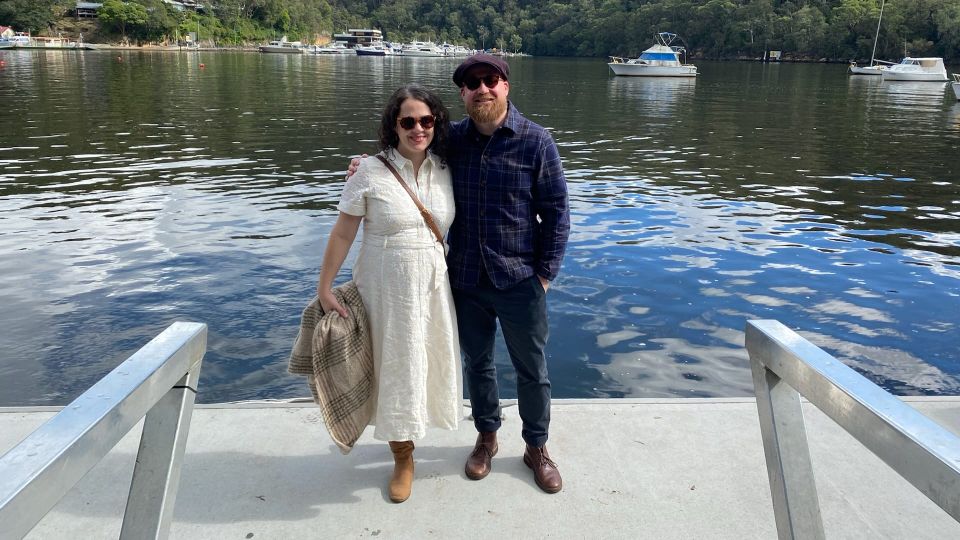
Hi there everyone, and welcome to another edition of the Food + Travel Edit. This week’s newsletter is inspired by the night I spent on Monday at the Good Food Guide Awards in Sydney. I’ve been honoured to be a restaurant reviewer for Good Food for four years now – it’s a real thrill for me to check out the Sydney food scene and celebrate its finest venues as a part of the Good Food team. What I heard on Monday night, however, was not just joy for all those restaurants, bars and pubs included in the guide, but also a shared state of deep concern from so many of the owners about the state of hospitality in Australia right now. Because it’s brutal out there. And what can we do about it? I’ve written my thoughts below. There’s also a celebration of an area and a cuisine that’s often overlooked, even by Good Food. And the glorious story of a Kiwi traveller who through he was flying to Western Australia, but ended up in Western Sydney.
Let’s talk about the cost of going out to eat. Because I love going out to eat. It’s one of my favourite things to do, a shared experience between me and Jess that bonds us and brings us joy. I even have fun doing it by myself. But goddamn, it’s expensive.
Jess and I went out the other night to a wine bar in Terrigal, on the NSW Central Coast, where we live. We had a $250 voucher to spend, kindly gifted to me as a tip by a tour group I led earlier this year in Spain.
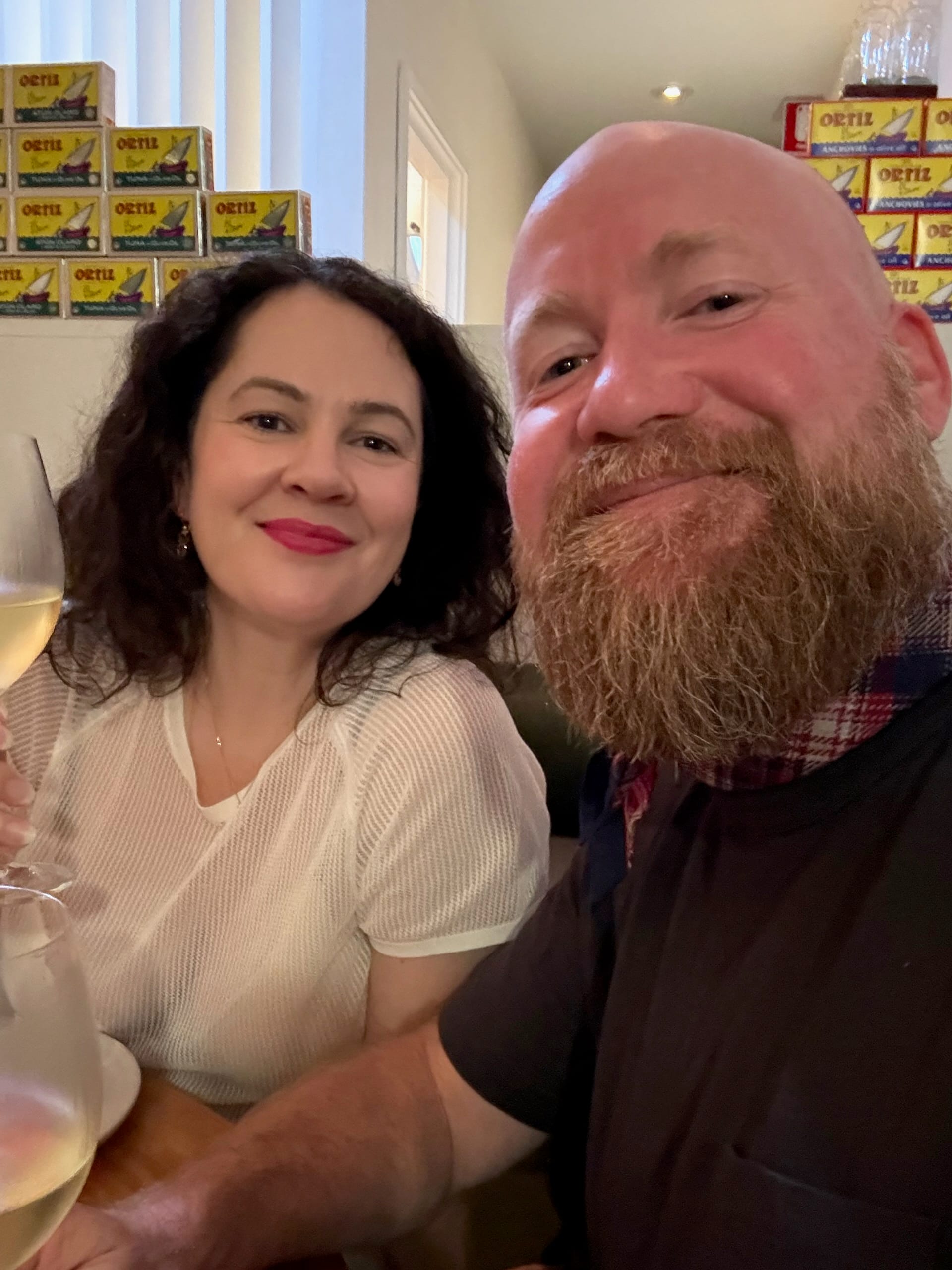
We also didn’t use a babysitter – we were very lucky that our in-laws agreed to look after the kids for the night, so long as we drove them down to their house in Sydney. So that’s two huge costs that we didn’t have to bear.
But we did want to drink, because this is a rare occasion and we were visiting a wine bar, so we took an Uber each way. That came to $85. We also overspent on our restaurant voucher, even without ordering dessert, so that was $66 extra. I also tipped $34 to bring it up to an even $100.
So, with fuel to get to our in-laws’ house in Sydney and back, twice, we ended up spending about $200 on what was essentially a free dinner. Without those bonuses of a voucher and free childcare it would have cost us $550 or more, to have a meal for two at a neighbourhood wine bar.
That, you would have to agree, is a lot of money.
None of this is the fault of the bar, or any restaurant really. Hospitality is brutal, with razor-thin margins and intense competition.
The Food + Travel Edit is a community-funded newsletter, and your support is very much appreciated. Please consider upgrading to a paid subscription, for just $5 a month, or $50 a year.
Rent is high, wage cost is high, food cost is high. You have to do something special right now not just to encourage people into your restaurant, but to encourage them out of the house at all. This is a hard business with high stress, where you constantly feel like you’re standing on the precipice of failure. Hospitality is definitely not to blame for this high cost.
And yet we have a problem here, we’re in a situation where Australia’s entire cultural fabric is being threatened, and I have no idea how to fix it.
Because I love the hospitality industry. I love restaurants and bars and cafes. I sat there at the Good Food Guide Awards on Monday night and looked around me and I could see passion and talent throughout the room, row after row of people who provide amazing experiences every night they throw open their doors, who smile and welcome guests and cook for them and pour their drinks and give them a memorable experience, even if the terror of failure is lurking ever-present in the background.

I want to support these people, these businesses. I also just want to go out to eat, because it’s fun, it’s one of the great joys in life. This is a situation in which everybody wins.
But how do we keep doing it when the cost is so high?
I don’t have a quick answer, or any answer at all. Because while there are plenty of drivers to explain the high costs – rent, wages etcetera – there’s also a financial system in place in Australia that is designed to punish diners and the businesses they frequent when something happens that’s far outside our control.
For those keen to do some dining in a new place, there are still a few spots available for my "Ancient Flavours of Peru" tour next year. Click the link below for more information, I would love to see you there.
That something is inflation, caused in part in Australia by government spending and low productivity growth, but also by global conflicts and associated high energy and transport costs. The way we counter inflation in Australia is via the Reserve Bank, which raises the cash rate, in turn raising interest rates, meaning people with mortgages have to pay more money to banks and have less to spend on discretionary activities such as going out to restaurants.
The cash rate in Australia was 3.60 last August; it’s now 4.35, and could rise again when the Reserve Bank meets next week.
So people like me who are paying off mortgages now have a lot less money to spend than they did a year ago. (Conversely, people who are not paying off mortgages and have a heap of savings have more money to spend, so someone much smarter than me will have to explain how that helps to battle inflation.)
Every time the cash rate goes up, the hospitality sector is hit. Consumers cut out their morning coffee from the café. They scale back on the glass of wine and the snack after work. They think twice about committing to a full sit-down meal.
This is not just a crisis for diners and for restaurateurs, but for Australia as a whole, and we need to appreciate that. Because we’re proud of our food scene here. We’re proud of the industry that we have in this country, a multi-cultural swathe of dining and drinking options that are winning Michelin stars and Good Food hats, not to mention just bringing pleasure to so many people.
They also serve an important purpose as “third places”, venues where communities can go to meet and socialise in a natural environment – and Australia doesn’t have many of those.
Our nation is in crisis if this goes on, if restaurants are forced out of business and we lose these cultural touchstones that say something about us and our history and our creativity and passion. And we will lose these venues if inflation keeps rising and the cash rate keeps rising and even dedicated diners like me and Jess are forced to stay home and cook noodles instead of going out and supporting great places.
I don’t know what we’re supposed to do about this. But Australia’s cultural fabric is being torn at. And surely that’s something the Reserve Bank could take into account.
FRIDAY FOOD ADVENTURE: FAIRFIELD
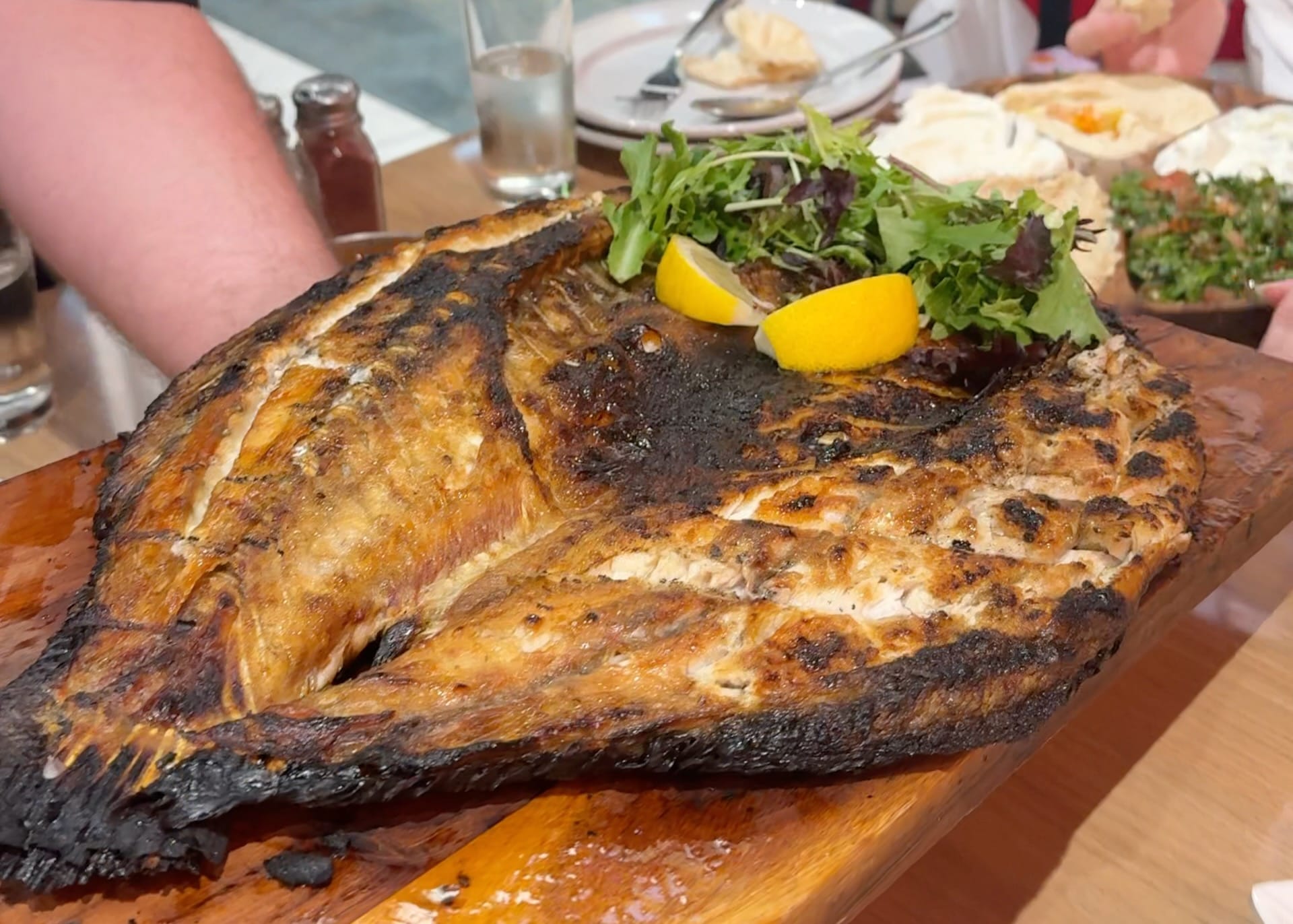
That wine bar visit wasn’t the only meal we went out for last week. On Friday afternoon we also took the kids on another foodie adventure – where we try to show them new cultures and get them to try different foods – in Fairfield, in Sydney’s west. This area is packed with Iraqi restaurants, so that was our focus. Whose kids know anything about Iraqi cuisine?
Well, now ours do. Our first stop was a failure, as we tried to call into Alamara Bakery, which presses its own sesame seeds to make tahini, but found it had closed early that day. Bummer. We then headed across the railway tracks to Lao Village to pick up some takeaway, because how often do you see dedicated Lao food in Sydney?
Finally, the main event, Abu Ali Restaurant. We chose this at random, to be honest, because I was looking for somewhere that served masgouf, the Iraqi national dish of spiced, char-grilled carp. It’s hard to find carp in Australia so Abu Ali uses barramundi, and it was sensational.
We massively over-ordered, with a plate of dips and tabouli, plus some Iraqi kebabs, a big plate of rice, and a stack of fresh Iraqi flatbread. And the largest fish you have ever seen. The kids loved it all, particularly just the novelty of being somewhere new and trying something different.
Much respect, too, for Al Anwar Sweets, where we grabbed a takeaway tray of Lebanese baklava, which we’re still working our way through.
THINGS I’M LOVING THIS WEEK
- Big shout-out to some of the first passengers to use Western Sydney International Airport this week, who didn’t realise they were flying to Western Sydney and in some cases thought they were off to Western Australia. Don’t ever change.
- The winner of Good Food’s “Critics’ Pick of the Year”, Anand Kumar “AK” Ramakrishna from AK's Diner, said after the ceremony that, “South-East Asia is not a trend.” Its food is here to stay. Hear, hear.
- For those obsessed with Vietnam – which seems to be pretty much everyone – VietJet has another flash sale going until Monday, with one-way fares from Australian ports to Vietnam starting from $199.
THINGS I’M NOT LOVING
- It’s sad but true: one of the ways many pubs in Australia stay in business is through poker machine revenue. Watching this reel, I was reminded of the cost we as a society have to bear for that reality.
- Algorithms have been running the travel world for some time now – but AI is going to supercharge it.
- This story is a few months old, but it’s something I’ll be covering soon, too: Is “out of control” US tipping culture spreading overseas?

Member discussion