From terrorist taunts to tourism: the incredible story of Nazy’s Guesthouse
Hi there friends, this week’s newsletter comes to you from Canberra Airport, which is far more exciting than it sounds. A few weeks ago I wrote a story for Traveller listing my favourite Australian airports, and I had to admit I had never visited Canberra (which many people rate as our finest). So this week, I decided to do something about it. I’ll report back next week. In the meantime, please enjoy this story that I’ve been wanting to tell for a long time, the amazing tale of Nazy Dakishvili’s Georgian guesthouse. Tourism can change the world for the better – here’s how. Stick around, too, for some American-style ribs, and airport delays in Europe. Oh, and please note that Nazy doesn’t like having her photo taken, which is why she doesn’t feature in any of the images below.
Almost everyone thought Nazy Dakishvili’s idea was a bad one. At best, they thought it was crazy.
Invite tourists here, to this place everyone is afraid of? Encourage people to have a holiday in the region where Americans once suspected Osama bin Laden was hiding? Spend a relaxing weekend with the ethnic minority that not so long ago was accused of harbouring terrorist cells from Chechnya?
It has the ring of a holiday in Cambodia about it – the Dead Kennedys version, rather than the popular modern vacay. Even locals questioned who would want to visit this place. Who will come to see us?
But Nazy was unperturbed.
“I discussed this with my parents,” she says now, relaxing at a long wooden table in the shade of grape vines in her family’s traditional home in northern Georgia. “And the first question was, ‘Are you really sure about it? Because we don't think that we will ever get any tourists here. Because of the reputation, they will be scared to come.’
“And I said, ‘The main thing is that it’s peaceful, it’s safe, and it’s welcoming. And even if we just bring one person, it's already a success.’ So, that's how I started.”
The Food + Travel Edit is a community-funded newsletter, and your support is very much appreciated. Please consider upgrading to a paid subscription, for just $5 a month, or $50 a year.
Nazy is the owner and operator of Nazy’s Guest House, a modest property deep in the Pankisi Valley in the north of Georgia. She, like her family and everyone in her small community in the village of Jokolo, is an ethnic Kist, a maligned minority group with roots in neighbouring Chechnya stretching back several hundred years.
The Kists have always been outsiders in Georgia – different religion, different customs, different language, different history – but tensions soared in the early 2000s during the Second Chechen War, when refugees poured across the border and accusations raged from both Russian and Georgian governments that the Kists were harbouring Chechen soldiers.
That crisis has long since passed, but reputations die hard.
“This was, of course, the political game between Russia and Georgia,” Nazy explains. “They said, ‘Why do you let Chechen terrorists to come into your country?’ But they were mostly women and children, refugees. So that's how we got the reputation.
“But still, I didn't know if the reputation was so strong until I actually faced it myself. I went to [Georgian capital] Tbilisi and everybody was saying about Pankisi, ‘Don't go there, it’s dangerous’. And I was asking, ‘Have you been there?’ They would say, ‘No, we haven’t, but we’ve heard that it’s dangerous.’”
Nazy, back then, was a practicing lawyer. She had moved from her childhood base in Pankisi, the home of everyone and everything she knew about the world, to Tbilisi, the big city, to study and begin working in family and contract law. However, the more she spoke to the people around her in the capital, the more she realised how misunderstood her community was, and how driven she was to change those perceptions.
“I started to approach different government ministries in Tbilisi and I said, ‘Why don’t you organise some kind of festival that we can bring Georgians to Pankisi to see that it’s safe, it’s a peaceful place, it’s only just stereotypes?’” she recalls. “I could see on their face how unhelpful they would be.
“So then I realised that we have to do something about that ourselves. We shouldn't ask for help from others. We should help ourselves. Then I just decided to quit my job and I came back and open a guesthouse.”
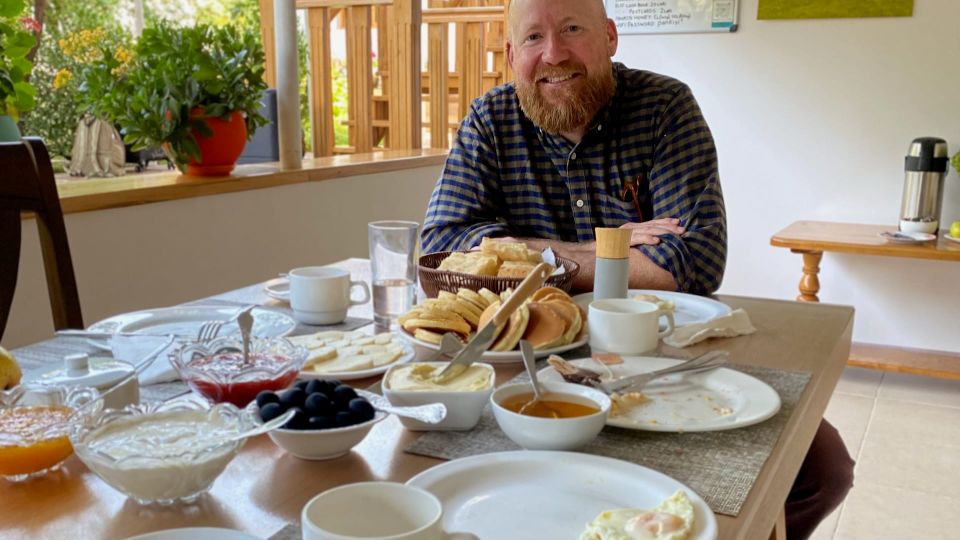
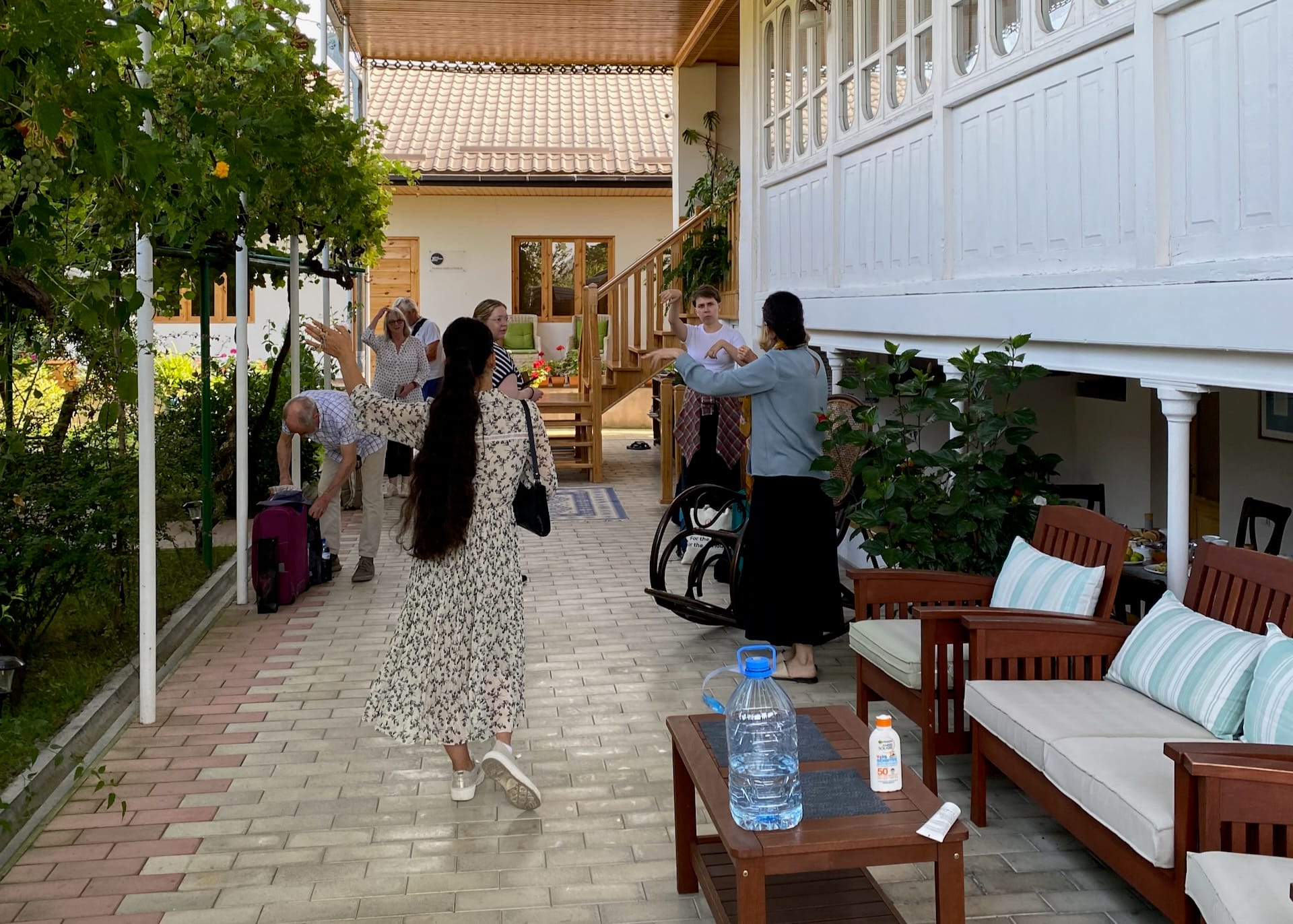
It was a risk, obviously. It was crazy to some people; bound for disappointment to others. But Nazy was determined. She set about converting her family home, which her father built in 1948, into a guesthouse, with comfortable, shared rooms for guests, and this large dining table downstairs near the vine-shaded patio, to share food and stories and hospitality.
Most Georgians, at this point, had never been to Pankisi; never even considered it. Most residents of Pankisi had never left. This village is tightly knit and closed off, not just culturally but physically: a typical Kist house is surrounded by high concrete walls, impervious to the outside world. You could drive or walk around Jokolo and still have no idea who lived here, or how they lived.
“The first year,” Nazy recalls, “everyone – not only my family members, but I discussed this with other community members – and the first question they had was, ‘Is it really going to… like, we might have journalists and spies coming!’
“Let them come! I was saying, ‘Let them come and take whatever they want, because that’s what we want, so they see the true situation.’”
It was an instant hit.
“The first year we had 65 tourists,” Nazy recalls. “From zero to 65. And the following years has been tripled, it’s been increasing and we have built to now, we have welcomed 1000 tourists.”
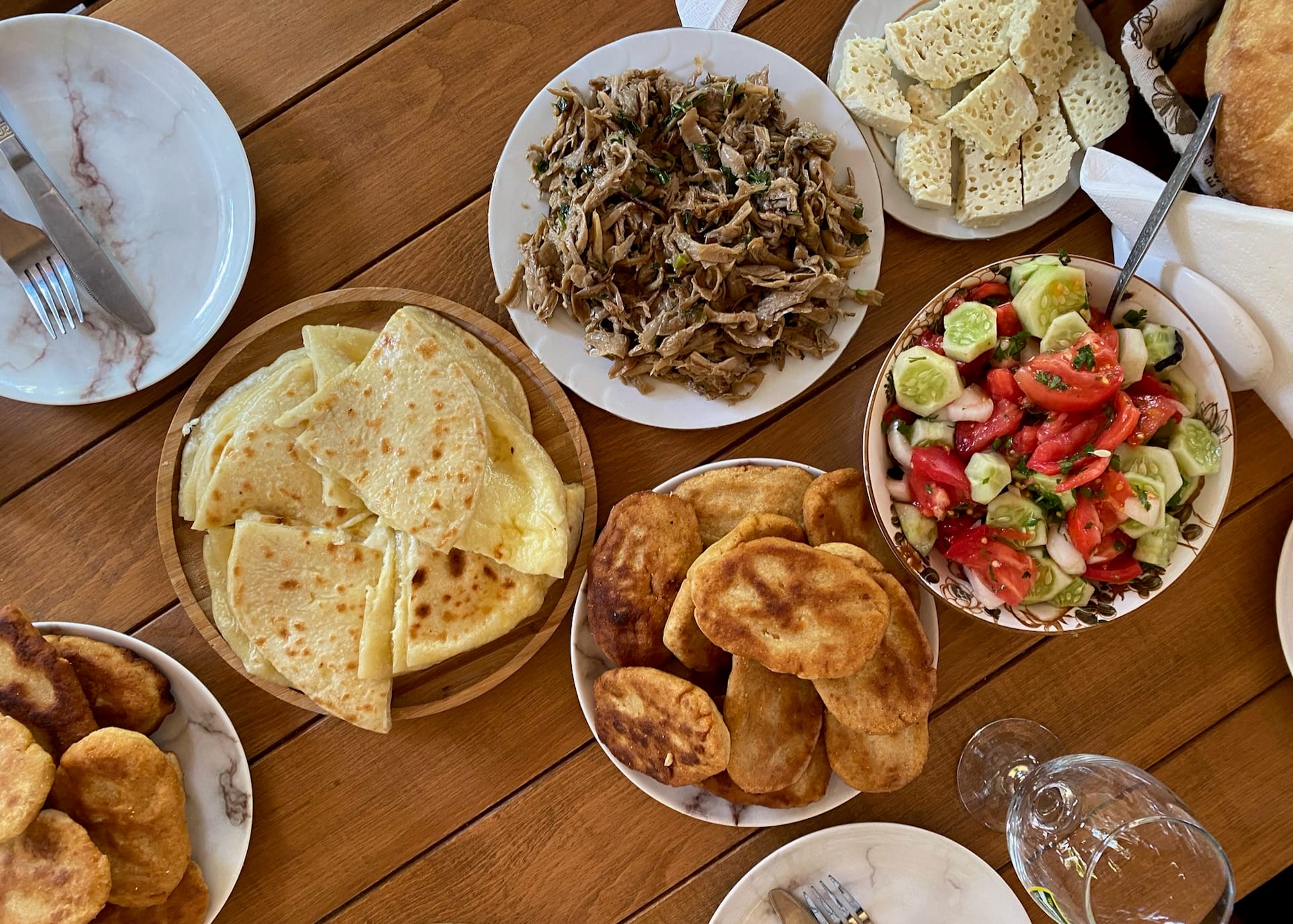
I’m one of those 1000 tourists. I’m also one of those journalists, so I’m painfully aware of wanting to get this right. But sitting here around the table with Nazy, having just finished off a huge breakfast spread – pancakes, fruit, bread, preserves – after a comfortable night in her family home, it’s hard to miss the attraction of a visit here.
We arrived yesterday. I’m on a tour with Intrepid Travel, a seven-night “Real Food Adventure”, and this is stop number two. We left Telavi, a market city in the heart of the Kakheti wine region, and drove up into the Pankisi Valley, leaving behind the traditional Georgian homes and entering an area with high walls and scattered minarets.
Our bus pulled up beside one of those walls in the village of Jokolo, a gate slid open, and there was Nazy, smiling in welcome, ushering us into the home her father built.
There’s not a huge amount to do in Pankisi, in the traditional tourism sense. There are no adventure activities, no major historical sites. The attraction here is the community, the chance to get to know people, to understand the area, to understand the Kists.
“The people here have the opportunity to actually show the truth themselves,” Nazy says. “Because it’s always been for them that even with the experience with the journalists, was they try to say something, like open their hearts and say, this is what’s happening. But every time it was used and abused by journalists, their words, that’s why they lost their trust in them.
“So now even today they come to me and they thank me for starting this, because it has given them job opportunities, and they are so grateful. And when we have guests, tourists, sometimes they are invited in by so many families. They come back here and say, ‘We are full, we don’t want any dinner!’ So yeah, the willingness was there, and everyone is happy and they were very accepting. That’s why I think I managed to successfully develop tourism in the valley.”
It’s easy to see the opportunity that tourism provides. We’re given a walking tour of the village by a guide, Mariam, who’s a student at the local high school. She takes us to visit a woman who makes felt hats in the traditional method. We go on to visit a local honey producer. We have lunch at Kitsuri Brewery, a tiny outfit brewing alcohol-free beer for this observant Muslim community.
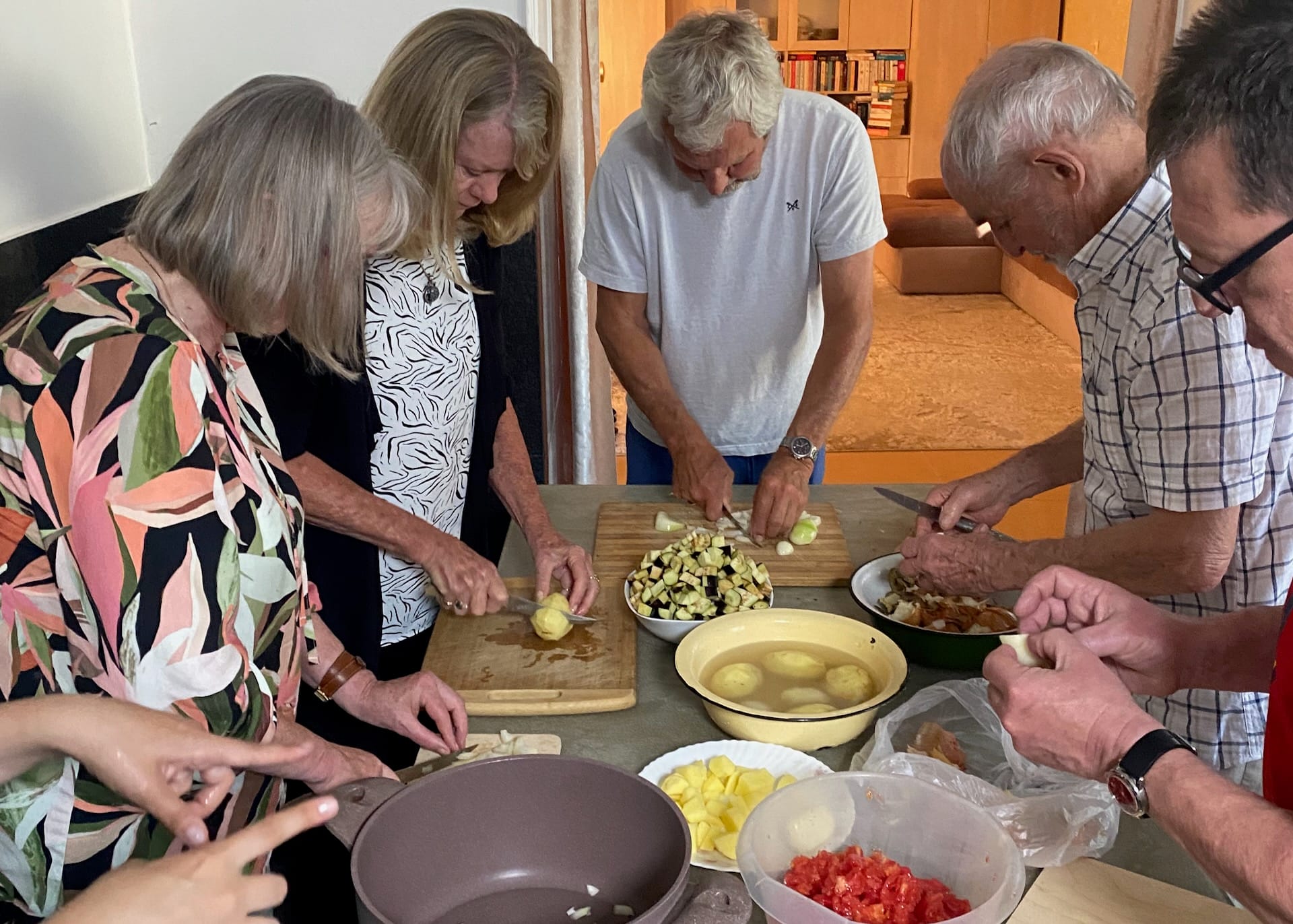
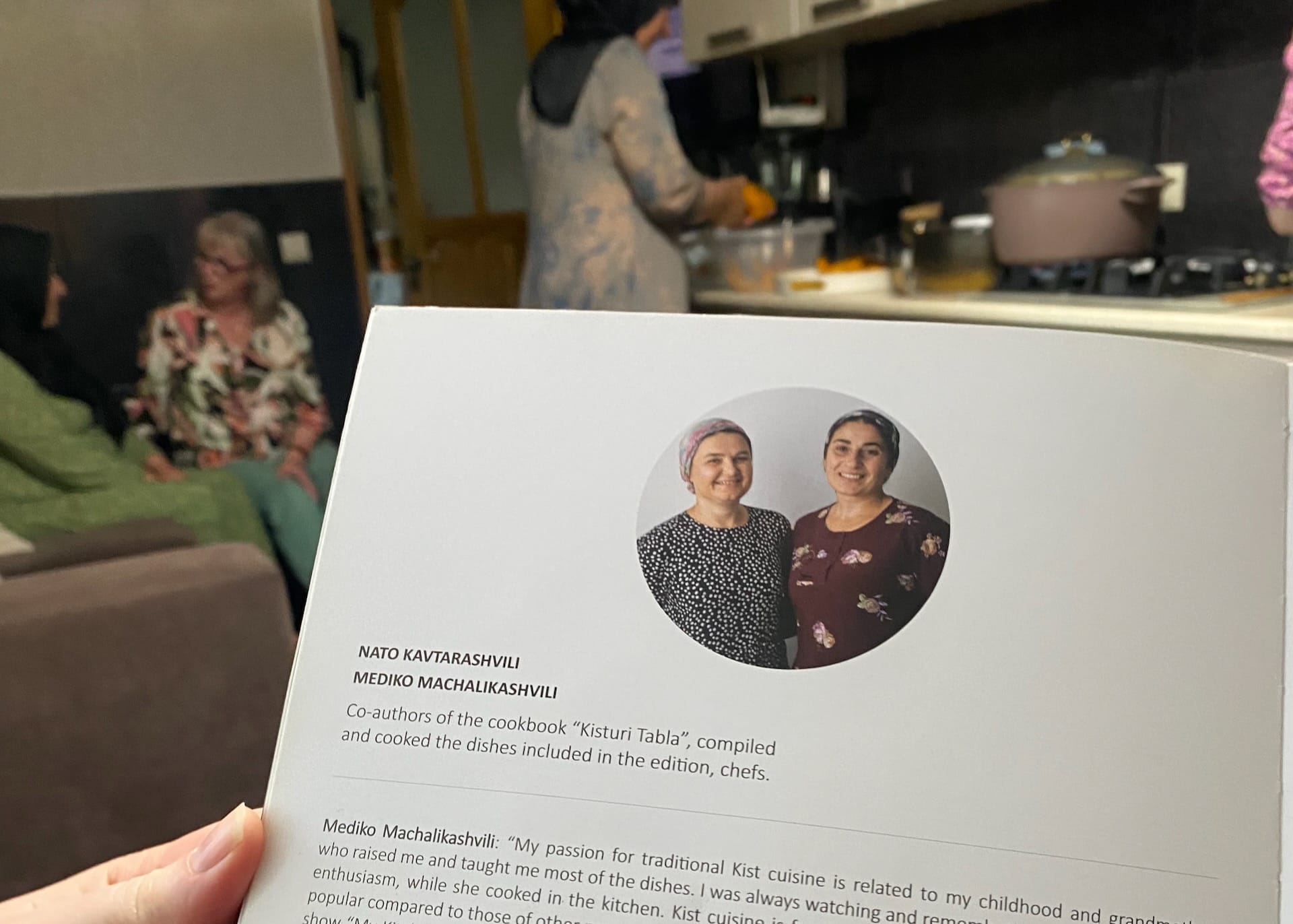
In the evening we walk quiet streets to visit Nato Kavtarashvili and Mediko Machalikashvili, two friends of Nazy’s and two very talented cooks, who we later discover starred on the Georgian version of “My Kitchen Rules”. We’ll be eating dinner here tonight, first learning a few Kist recipes and techniques with Nato and Mediko, and then sharing a meal around a large table.
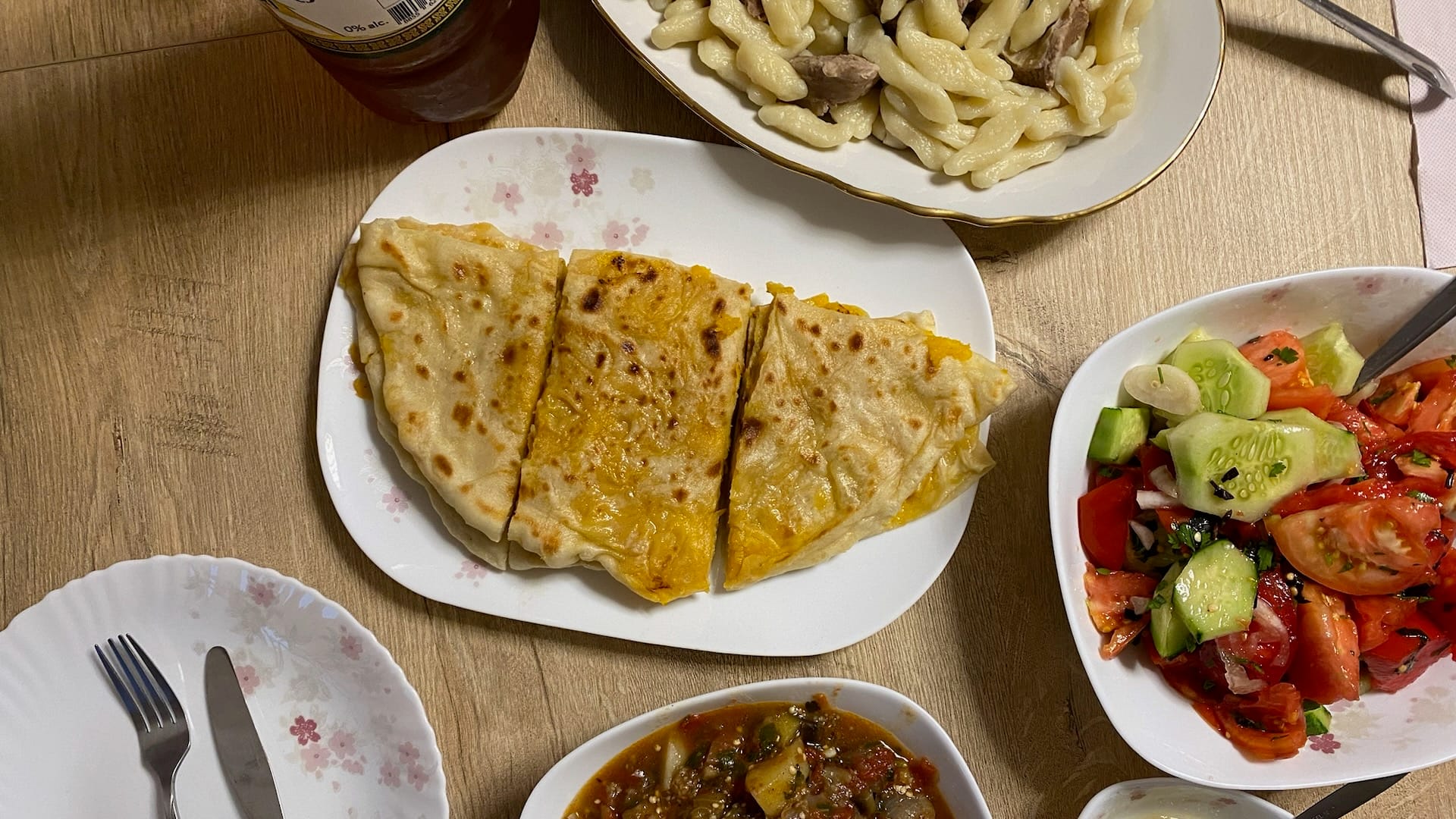
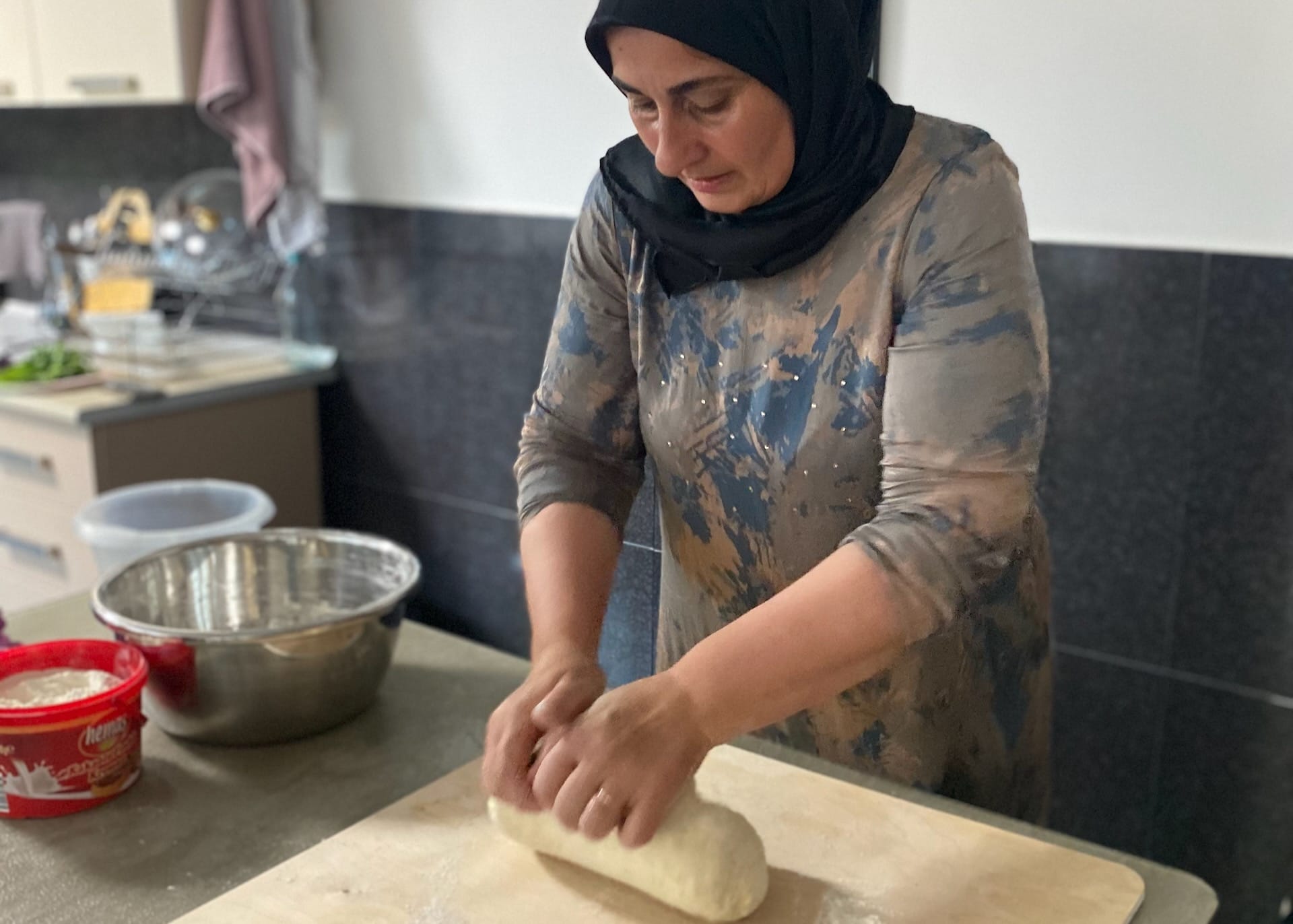
We feast on classic dishes such as jijig-galnash, a sort of thick, hand-rolled pasta with sun-dried meat, and ghaabak-chaabilgish, a thin bread stuffed with mashed pumpkin.
This is what Nazy is hoping to show to the world, I realise at that table. This is the key aspect of Kist culture: hospitality. It’s deeply ingrained, passionately observed, and beautifully genuine.
“The guest has the highest place in the house,” Nazy tells me later. “We have a lot of poems and novels written about… for example by Georgian authors about the hospitality of the Chechens. There is a saying that even if you have the guest who killed your brother, he will be still accepted, because he is our guest. So before the enemy, he's our guest, and he will be respected.
“So for visitors now, we just want to create the atmosphere for them to feel comfortable and peaceful and relaxed. It’s a very strong tradition.”
It's also the secret that guaranteed the success of Nazy’s crazy idea.
I visited Nazy’s Guest House as a part of Intrepid Travel’s Georgia Real Food Adventure tour. You can find out more about it here. I travelled with Intrepid as a guest of the company. To book direct with Nazy, you can find her here.
WHAT WE’VE EATEN THIS WEEK
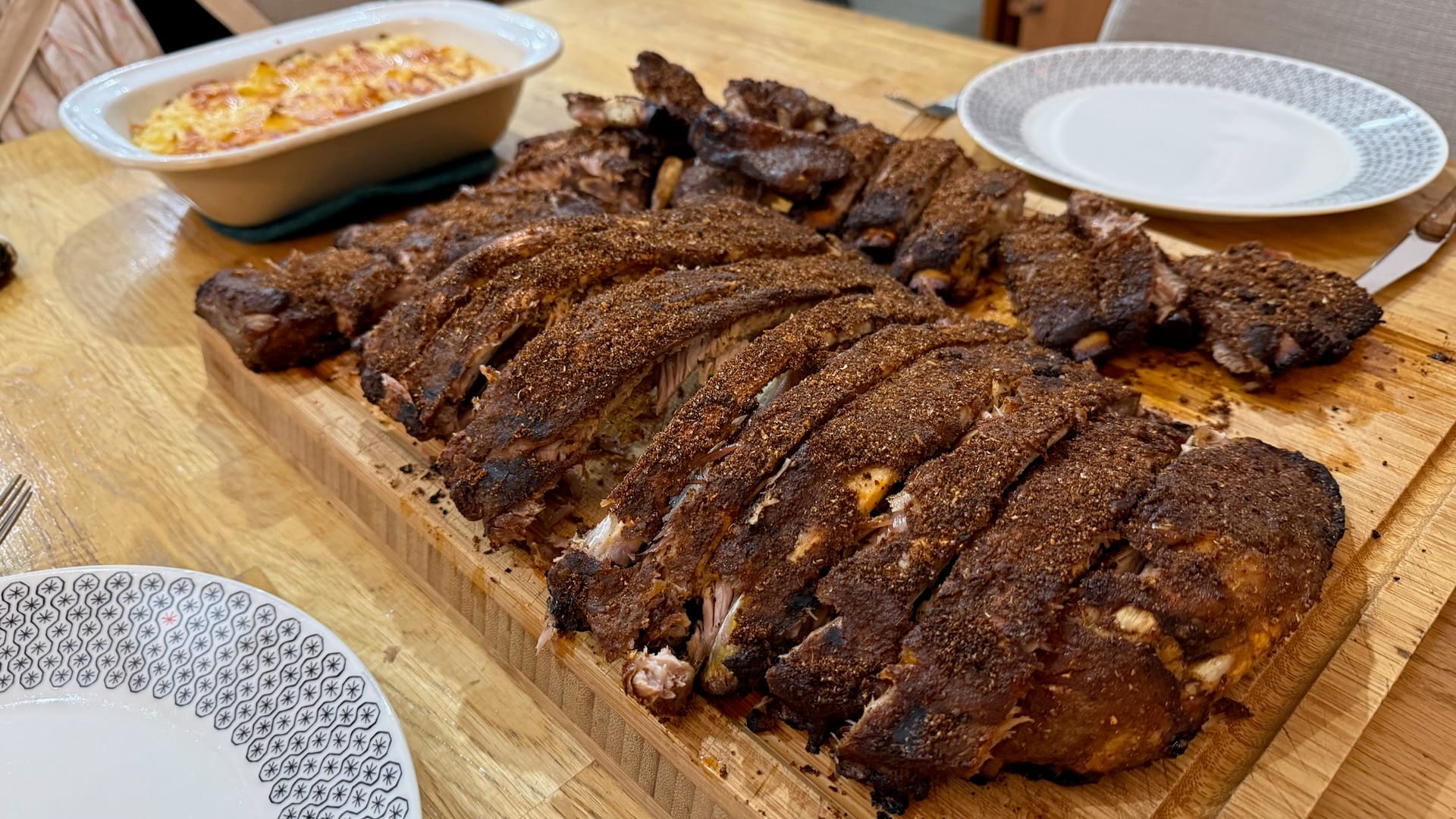
This was a mistake. I bought a rack of ribs a few weeks ago to make ramen broth and then decided I didn’t need them, so we had a massive rack of pork ribs lying around. What do you do? If you’re us, you go out and buy even more ribs and make a massive family meal out of it. Jess used this recipe from Serious Eats for the spice rub and the cooking instructions, then turned it on with a heap of traditional American barbecue sides: corn, mac and cheese, pickles, slaw, and Franklin Barbecue sauce, which you can find here. Now that’s a serious family dinner, and a big hit with the kids (and me).
WHAT I’M LOVING THIS WEEK
- The cooking class in Georgia with Nato and Mediko was a good reminder that we put too much emphasis sometimes on chefs and restaurant culture, when some of the best food in the world is being made in people’s homes. You don’t have to be a chef to be a great cook.
- A report released this week has found that 93 per cent of Australians still intend to travel this year, despite rising cost-of-living expenses. We’re a dedicated bunch.
- Is Canberra Airport the best airport in Australia? I visited this week for the first time and on first impressions it’s up there with my previous choice for the top tier, Adelaide.
WHAT I’M NOT LOVING
- There are reports of long queues in European airports right now, with waits of up to four hours for arriving passengers to be processed under the EU’s new entry requirements. Manage your expectations if you’re travelling this summer, and ensure you have the right documentation.
- Have travellers lost their minds? I’m riffing again this week on the queues in San Sebastian, and wondering if we have lost the ability to discern popular from good.
- Qantas passengers, you have about 10 more years to enjoy flying on A380s: the airline has recently hinted that its plans to retire the big birds will be brought forward, beginning in the early 2030s. Boo.
Member discussion